
Functional mobile seating solutions
Assessment Considerations
Occupational therapists are often asked to complete assessments for clients who can mobilise around their home with or without a mobility device, but who cannot safely stand while performing fine motor tasks or carry items while walking. These clients may benefit from a non-wheelchair, mobile seating solution that enables them to move around a workspace, carry items, and complete activities while seated.
Start with Simple Solutions
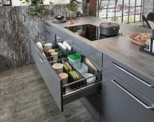
The assessment should include consideration of the client’s diagnosis and prognosis, mobility and transfer abilities, balance and strength, falls risk, and environmental factors.
Once information has been gathered through the assessment process, the assessor should consider whether simple, low-cost strategies and equipment could improve their client’s independence. These may include:
Positioning frequently used items within reach.
Completing tasks seated at a table and using a trolley to transport items.
Using a perching stool for supported standing activities at bench height.
Customised office chairs
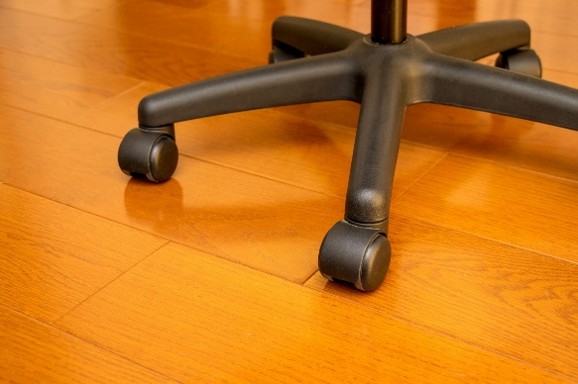
When low tech or lower cost options are not suitable, a customised office chair may provide a cost-effective mobile seating solution. It can support clients to remain seated, move short distances using their feet, carry items safely, or the seat height can be adjusted to allow them to work at a table or bench.
Various modifications can be made to the office chair and the castors as described in the tables below.
Office chair customisations
Clinical considerations | Custom options |
|---|---|
Seat height adjustability |
|
Seat size and shape |
|
Seat comfort |
|
Arm support while seated and/or for transfers |
|
Adjustability and back support |
|
High body weight/heavy use |
|
Castor options
Castor type | Features |
|---|---|
Standard castors |
|
Brake castors (friction brake) |
|
Soft-wheel brake castors |
|
Manual brake castors |
|
Reverse brake castors |
|
Large castors |
|
Glides |
|
Key takeaways
Ensure you provide clear clinical justification for any equipment solution
Always consider lower-cost alternatives first – the office chairs on the ACC Simple and Standard lists are a good starting point
A customised office chair may meet a client’s functional needs at a fraction of the cost of specialist seating systems
Higher-cost mobile seating solutions should be reserved for clients whose needs cannot be safely met with standard or modified seating.
References
Resources - Ergonomic Office Chairs - Bytes & Pieces Limited
https://www.enable.co.nz/acc-assessors/product-information/acc-equipment-online
Latest posts
-
Outcome measures for wheelchairs and seating
18 September 2026
-
Physiotherapist checklist for writing strong SRNA-SDA reports for non-List exercise equipment
16 September 2026
-
Functional mobile seating solutions
15 September 2026
-
Impact of power wheelchairs for people with Motor Neurone Disease
11 September 2026
-
MRES updated operational guidelines
1 September 2026